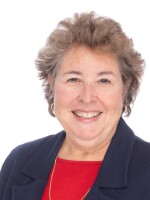
North Shields was once a bustling fishing town on the Tyne River near New Castle. In the 1800’s its port welcomed ships from around the world. It was also home to a passionate Quaker community that raised money and circulated petitions to end slavery in America. Nina Brown is a local historian.

“The world-famous abolitionist Frederick Douglas came and spoke twice in North Shields at meetings. There’s a guy called William Turner who was a Unitarian minister, and he set up one of the first anti-slavery committees in 1791, and, of course, Earl Grey was the prime minister at the time – putting an act thru Parliament in 1833, so I think it’s something to be quite proud of –- people in the northeast fighting for what’s right.”
And today it’s celebrating that pride around a woman from Virginia who escaped from slavery in the early 1830’s. She shared her story with the Quaker family who took her in, and this year the BBC commissioned Richmond actress and director Shanea Taylor to speak her words.
“I could not sleep on the ground because of the snakes. I had to sleep up in the trees.”
Mary Ann Macham had run from a plantation in Middlesex County where she suffered beatings for 17 years. She hid in a wooded area on the coast for weeks.
“I tied my frock tight around me and my shawl tight around my head and neck so that the snakes could not get at me. I hardly dared to go to sleep for fear of falling out of the tree. I was hiding in the woods until the ship from England – which they were expecting – came up the river.”
She stowed away on that ship which stopped in the Netherlands, Grimsby, Hull and York before docking in North Shields. That’s where a local teacher – Steph Towns – found Mary Ann’s story while researching Britain’s role in slavery.

She posted about it online, and Nina Brown read about that discovery. Her group – the Old Low Light Heritage Center -- created a show about the fight against slavery.
“Nobody knew this story. We wanted to share it wider across the communities, so a group of us volunteers put together an exhibition which we called Breaking Chains: North Shields and Slavery, and Mary Ann was very much the center of that exhibition.”
They raised money to place a headstone at Mary Ann’s grave. She had married a local man, lived not far from the port and died at the age of 91.
“I think once she came to North Shields she was very much welcomed into the community – - particularly by the Spence family and a local Quaker community -- her actual life was quite quiet and sheltered," Brown says. "Probably that’s why not much was known about her. We know about her baptism and her marriage and her death.”
But that was enough for local government to commission a statue by area artist Keith Barratt.

“I wanted to show Mary Ann’s struggle and her suffering – the fact that she came from a place of great pain, but also I wanted to demonstrate her courage. I’ve tried to represent in the sculpture that moment of finding freedom – the metaphorical breaking of the chains.”
He interpreted Mary Ann in Bronze as a figurehead on the bow of a ship.

“Not only the story of a very brave Black woman’s escape from enslavement, it’s also a story of liberation. This is something universal which many, many people will understand.”
Historian Nina Brown hopes the statue will be an inspiration for the community. Mary Ann Macham’s story has also prompted a 15-year-old girl to ask the U.K. to include Black history in the national curriculum.
To see video of North Shields today, go to:
https://www.youtube.com/watch?v=PKDATfQhFpI