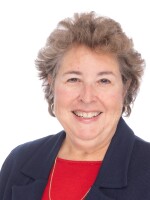
Filmmaker Din Blankenship and her husband were unable to conceive kids of their own – a common problem in this country, with more than 13% of American women of reproductive age and 11 of men having fertility problems, so the couple decided to adopt, and Blankenship discovered the subject for her next documentary.
"It really started with one of the children, when we were in the hospital with her birth mom," Blankenship recalls. "She was about to be leaving the hospital, and she placed her baby into my arms, and whispered, ‘I wish it could be me,’ as she hugged me, and then walked out of the hospital."
Blankenship and her professional partner Liz Lodge Stepp felt the stories of women who opt to surrender their children for adoption needed to be told.
"You know I think we’re quick to celebrate the families that are created through adoption, and I don’t think we’ve really sat with the experience of the many women have had of making these impossible choices."
They met Rachel, the mother of five kids, and filmed a somewhat chaotic day at her home. It wasn’t easy for this single mother – her x-husband in prison – but she found time to play with her youngest child.
And to help the older kids with homework
"Are we adding or are we subtracting?
But she was reluctant to raise her sixth child.
"My ex-husband was really abusive, and he ended up raping me. (music) For like the first five months, in my mind, I wasn’t pregnant. I don’t even know how to make sense of that."
By the time she accepted that her pregnancy was the result of a sexual assault, it was too late for an abortion, but Rachel struggled with the idea of surrendering the baby for adoption.
"I’m adopted, but I don’t know my birth mom. I feel like she didn’t love me. I couldn’t understand how she could just give me away with no communication. I really don’t know how to take this emotionally."
The film also profiles Nicole, a teenager who didn’t feel ready for parenthood.
"I know how hard my mom works, especially being a single mom, and I’m just a kid having a kid. I’m only 19."
Her mother quietly hoped Nicole would keep the baby. She loved the idea of being a grandmother, but she wanted to support her daughter’s decision – and for Nicole it was a tough choice.
"I don’t think that I could keep her, but I also don’t want to give her away – like I don’t want to make either decision."
In both cases, Blankenship says, the birth moms’ choice would have an impact on others.
"So Nicole's mom, Kim, is the third character in the film, and it was amazing to watch her kind of war internally with wanting to support whatever choice her daughter made but also carrying this deep grief. This is going to be devastating and crushing if she does go through with her adoption plan. There's a scene in the film where Kim walks into the kitchen and bursts into tears away from Nicole as a way of trying to kind of protect her. I so appreciate Kim's perspective in the film and then also Rachael's children, because it shows this is a decision that is not made in total isolation.
Both subjects would also consider the possibility of an open adoption in which the birth parents don’t raise their biological children but do have contact with them.
"So much of what we have learned from adoptees is how important that is – that those pathways and relationships stay open, both in terms of how adoptive families are talking about birth families and also that those relationships are there, so that when you do have questions and you want to understand why, you have that relationship of trust to be able to ask your birth parent themselves."
The documentary called Love, Your Birth Mom caught the eye of a major Hollywood production company run by Kathleen Kennedy and Frank Marshall. Blankenship says they may do a theatrical distribution of the movie around Mother’s Day. It will be screened at the Virginia Film Festival Sunday, October 25th at 11, and the filmmakers will be on hand afterward to discuss their work.