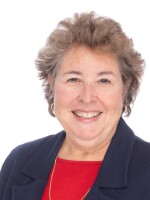
Manuel Lerdau is a professor in the dept. of environmental sciences at UVA. His childhood friend, Paul Mirel is employed by NASA, and together they have come up with a new way for people to track the health of plants on earth.
"All plants, in order to induce photosynthesis, which is how they get their food, have molecule inside called chlorophyl," he explains. "Chlorophyl absorbs + blue and red light and reflects green light. That’s why leaves are green."

The System for Terrestrial and Ecological Land Life Analysis or STELLA contains a microprocessor like what’s found in a smart phone along with sensors that detect changes in plants even before we can see them with our eyes.
Using this information, farmers growing crops in very dry areas can be more precise in their use of water.
"Land managers out in the desert southwest who are very interested in areas where crops are being grown, but – of course – it’s extremely dry, and because water is so scarce, they want to know exactly when they should water their crops," Lerdau says. "You don’t want to put too much on, because you don’t have that much water to use, so by using STELLA, they can actually detect when the plant is beginning to dry out – before it starts to wilt. By the time it wilted it could be too late, but if you water it all the time you are using far more water than you need."
The device can also help farmers, home gardeners and foresters to detect the impact of pollution on plants.
"Plants are being affected by air pollution before we can actually see the visible effects on the leaves. Their metabolism is changing before the leaves start to show a change, and by the time the leaf is showing damage, it’s usually too late."
A STELLA unit is simple and inexpensive enough that many people can make it themselves.
"Everything is available: how to build it, how to buy the components and all of the software. It opens up the world of remote-sensing science to anyone who has $200. That person can now have an instrument equivalent to what NASA is flying in space. Everything is available: how to build it, how to buy the components and all of the software."
And, Lerdau says, these little sensors could be launched in big numbers to give humanity an even better sense for what’s happening to the plants that sustain us around the world.
"They’re essentially satellites roughly the size of a bread box. Say you’re going to restock the International Space Station. You could put thirty cube sats on it, and actually have 20, 30, 40 – 100 instruments in low-earth orbit, making measurements simultaneously? There is a group at the University of Toledo that is planning to launch STELLA on a cube sat – to test this idea, and my fingers and toes are all crossed, hoping that they succeed."
Already, he adds, many kids are using STELLA units that weigh less than the lightest iPhone.
"By putting scientific instruments into the hands of students – especially the high school and junior high level -- they get the experience of doing science – not just reading about it."
Sensing technology is improving, and Paul Mirel is hoping to upgrade the System for Terrestrial and Ecological Land Life Analysis by designing a unit that will work under water.
"So you can measure what’s going on in marshes and oceans and rivers in terms of biological activity, so we’re going beyond terrestrial, but we don’t have a new acronym yet." Lerdau says.
He, Mirel and another NASA colleague – Michael Taylor – also plan to launch a website where STELLA users can report data and raise new questions for this new device to help scientists understand more about our ever-changing world.
For more information is available from NASA here.